Types of Aluminium Window Profiles: Complete Guide and Best Options 2026

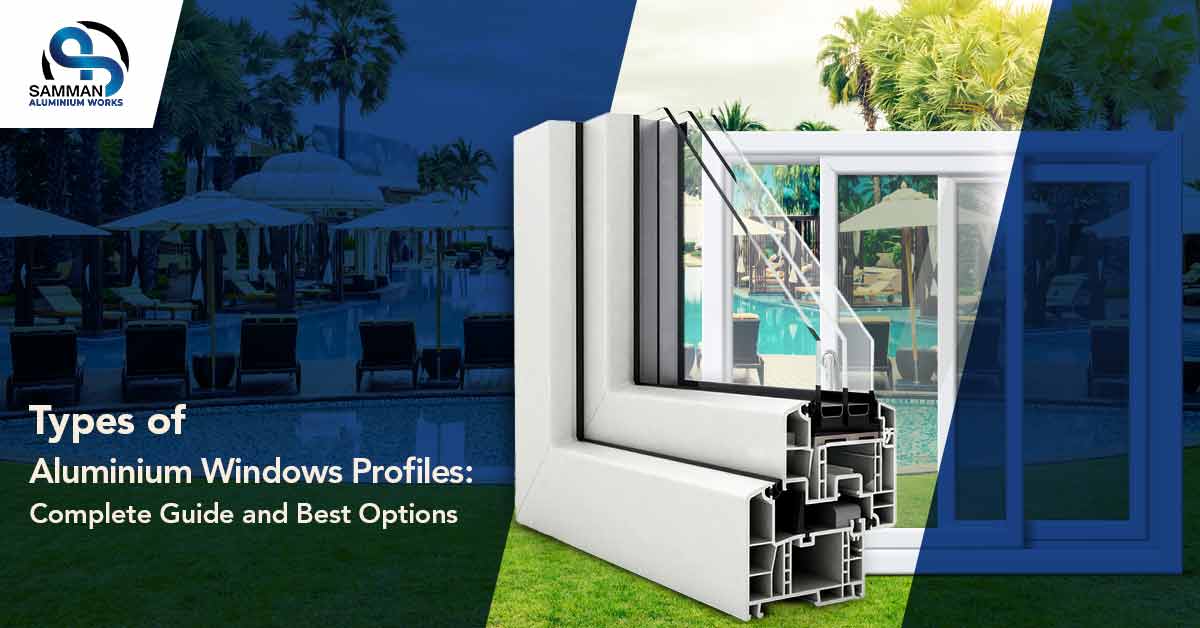
Choosing the right aluminium window profile isn’t just a design decision; it’s a structural, thermal, and financial one. The profile you specify determines how your windows perform against Saudi Arabia’s extreme heat, how much energy your building consumes, how long the system lasts, and what you’ll spend maintaining it over time. This guide covers everything you need to know about types of aluminium window profiles, from system categories and technical specifications through to the differences that matter most on real projects. Understanding types of aluminium window profiles is the first step to making the right specification decision. Al Samman Aluminum Factory has been engineering and manufacturing aluminium window systems for over 50 years, and this guide is built on that depth of experience.
What Are Aluminum Windows Profiles?
An aluminium window profile is the extruded aluminium section that forms the structural frame of a window, the part that holds the glass, supports the opening mechanism, and connects to the building’s wall structure. The types of aluminium window profiles available today vary significantly in cross-section, alloy grade, thermal performance, and intended application. Profiles are produced through an extrusion process: aluminium billets are heated and pushed through precision dies to create specific cross-sectional shapes, then cut to length, finished, and assembled into window units.
How Aluminium Profiles Are Made?
The extrusion process starts with aluminium alloy billets, most commonly 6063 or 6061 grade. These are heated to around 450–500°C and pressed through a hardened steel die that defines the profile’s cross-section. The extruded section is then cooled, straightened, cut, and subjected to surface treatment, either powder coating, anodizing, or PVDF coating, before being assembled into a complete window system.
The quality of the billet material and the precision of the die directly determine the profile’s dimensional accuracy, surface quality, and long-term structural performance. Al Samman Aluminum Factory uses premium 6063-T5 and 6063-T6 alloy billets across its window profile production the same grade specified on major commercial and hospitality projects across the Kingdom.
Explore more: Best Aluminum Company in Saudi Arabia
What Do Profile Specifications Mean?
When engineers and contractors specify aluminium profiles, they reference several key parameters: alloy and temper designation (e.g., 6063-T5), wall thickness (measured in millimeters), profile depth (the dimension from inside to outside face), thermal break configuration, and surface finish. These specifications collectively define the profile’s structural capacity, thermal performance, and compliance with Saudi Building Code requirements.
Understanding these parameters is the foundation of choosing the right profile for any project, residential, commercial, or industrial.
Thermal Performance (U-Value) in Aluminium Window Systems
Beyond basic profile specifications, thermal performance is measured using U-values. The frame U-value (Uf) refers to the thermal performance of the aluminium profile itself, while the overall window U-value (Uw) includes the glazing, frame, and installation quality.
In Saudi Arabia, Uw values typically range between:
- 3.0–3.5 W/m²K for standard profiles
- 1.6–2.5 W/m²K for thermal break systems with double glazing
Lower Uw values directly reduce cooling loads and improve compliance with the Saudi Building Code (SBC) and energy efficiency standards.
Choose Al Samman Aluminum Factory for high-performance aluminium window profiles. Request your quote today.
Types of Aluminum Profiles for Windows in Saudi Arabia
Saudi Arabia’s climate places specific demands on types of aluminium window profiles that go beyond what’s required in milder environments. Sustained temperatures above 45°C, intense UV radiation, occasional coastal humidity, and dust storms all affect profile selection. Here are the main types of aluminium window profiles used in the Saudi market.
Standard Aluminium Window Profiles
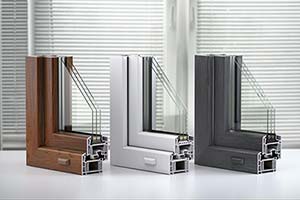
Standard profiles are the most basic among the types of aluminium window profiles, the baseline for most residential and light commercial applications. They use a single aluminium section without a thermal break, meaning the aluminium on the interior and exterior faces of the frame is thermally connected. This is the most cost-effective option and performs adequately in climate-controlled spaces where thermal bridging isn’t a critical concern.
In Saudi Arabia, standard profiles are widely used in internal partitions, low-rise residential buildings, and applications where the window is shaded from direct sun exposure. For exposed facades in commercial buildings, standard profiles are generally not the optimal specification.
Thermal Break Aluminium Profiles
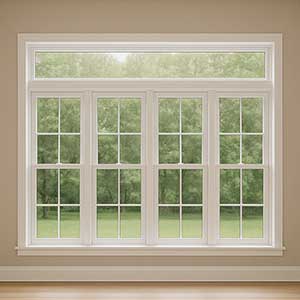
Thermal break profiles are among the most important types of aluminium window profiles for energy-efficient commercial construction in Saudi Arabia. A polyamide (PA66 GF25) insulation strip is mechanically inserted between the interior and exterior aluminium sections during manufacturing, creating a physical and thermal barrier that interrupts heat conduction through the frame.
In Saudi Arabia’s climate, where air conditioning accounts for 60–70% of commercial building energy consumption, thermal break profiles deliver measurable energy savings. Buildings using thermal break window systems can reduce heat gain through windows by 30–40% compared to standard aluminium frames, a significant factor in achieving SASO and Saudi Green Building Council compliance.
Al Samman Aluminum Factory produces thermal break window profiles with PA66 GF25 insulation strips, the same specification required by major hospitality and commercial developments across the Kingdom.
Important article: Aluminium Double Glazed Windows Prices in Saudi Arabia 2025
Sliding Window Profiles
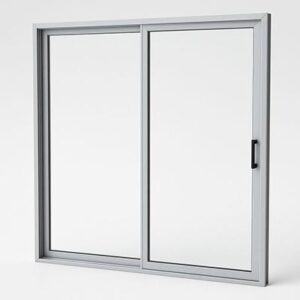
Sliding window profiles are among the most widely used types of aluminium window profiles in Saudi residential and apartment buildings, designed for windows where the sash moves horizontally along a track rather than swinging open, saving clearance space and offering easy operation.
Profile specifications for sliding windows include: track depth (determines how securely the sash sits in the frame), interlock profile geometry (determines the weather seal between meeting stiles), and drainage provisions (essential in coastal areas and during seasonal rain). Al Samman sliding window profiles are designed with drainage channels built into the sill profile, preventing water accumulation in the track, a common problem with poorly specified systems.
Casement and Awning Window Profiles
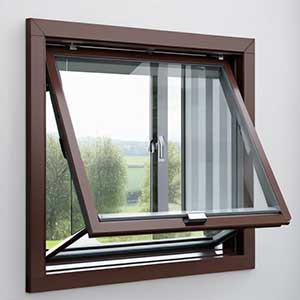
Casement windows are hinged on one vertical side and swing outward; awning windows are hinged at the top and open outward at the bottom. Both types are used in premium residential and commercial applications where maximum ventilation and weather sealing are priorities.
Casement and awning profiles are among the types of aluminium window profiles that require more complex hardware integration than sliding systems; hinges, espagnolette locks, and friction stays must be specified to match the profile’s fixing points. Al Samman engineers profiles and hardware as an integrated system, ensuring compatibility and eliminating the fit issues that occur when hardware from different manufacturers is combined.
Fixed Window Profiles (Fixed Lights)
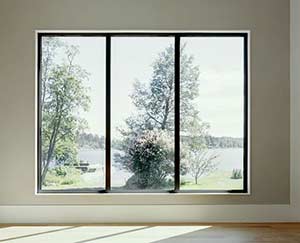
Among the types of aluminium window profiles, fixed window profiles are used for windows that don’t open, installed to provide light, views, and thermal separation without a ventilation function. They’re common in commercial tower facades, curtain wall infill panels, and large glazed areas where ventilation is provided by separate mechanical systems.
Common alloy specifications for fixed profiles include 6063-T5 and 6063-T6. Cross-sectional shapes vary significantly depending on the glazing weight, span, and connection method, from flat single-bar sections to deep structural profiles for large-area glazing.
Tilt-and-Turn Window Profiles
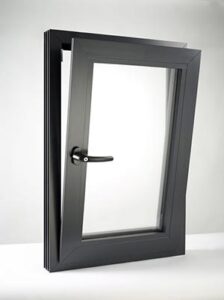
Tilt-and-turn systems are among the most sophisticated types of aluminium window profiles they allow the window to open in two modes: tilted inward at the top for ventilation, or turned fully inward like a casement for cleaning and emergency egress. They’re specified in premium commercial, hospitality, and high-end residential projects where operational flexibility and high weather performance are required.
Tilt-and-turn profiles are among the most dimensionally complex aluminium window systems, requiring precision tolerances on both the frame and sash to function correctly across the full temperature range experienced in Saudi Arabia’s climate.
Performance Testing Standards for Aluminium Window Systems
All types of aluminium window profiles used in commercial projects should be tested against international performance standards:
Air permeability (EN 1026 / ASTM E283)
Water tightness (EN 1027 / ASTM E331)
Wind load resistance (EN 12211 / ASTM E330)
These tests determine how the window system performs under real environmental conditions, including wind pressure, rain penetration, and air leakage — critical factors in Saudi Arabia’s climate.
Explore premium types of aluminium window profiles engineered for Saudi Arabia’s climate. Contact Al Samman Aluminum Factory today for expert recommendations and a tailored quotation.
Advantages of Aluminum Profiles for Windows
Understanding the advantages of different types of aluminium window profiles helps clients make informed specifications balancing performance, cost, and compliance requirements from the start.
Structural Strength-to-Weight Ratio
Across all types of aluminium window profiles, aluminium delivers approximately one-third the weight of steel while carrying structural loads effectively when properly profiled. This means window frames can span larger openings, support heavier glass units, and maintain dimensional stability over time without the deflection risk associated with lighter materials like uPVC.
For commercial projects with large glazed areas or floor-to-ceiling windows, the structural capacity of aluminium profiles is not a feature; it’s a requirement.
Corrosion Resistance
Aluminium forms a natural oxide layer that protects it from corrosion without any applied treatment. With powder coating or anodizing applied as a surface finish, types of aluminium window profiles maintain their appearance and structural integrity through decades of exposure to Saudi Arabia’s UV radiation, humidity, and sand.
Unlike steel (which rusts) or wood (which warps and rots), aluminium profiles in properly specified systems have operational lifespans of 30–50 years with minimal maintenance. Al Samman Aluminum Factory uses PVDF and high-quality powder coating formulated specifically for the harsh Saudi climate, providing UV and chemical resistance that standard decorative coatings don’t match.
Design Flexibility
The types of aluminium window profiles available today offer virtually unlimited design flexibility. Aluminium’s extrusion process allows any cross-sectional shape to be produced, enabling slim sightlines, complex multi-chamber sections, integrated drainage channels, and custom aesthetic details that other frame materials can’t achieve. Powder coating provides a RAL color range of over 200 options, with custom colors available on request.
For projects where architecture and window design must align precisely, Al Samman’s custom profile fabrication capability means the window system can be engineered to match the design intent rather than adapted from a standard catalog.
Sustainability and Recyclability
Aluminium is one of the most recyclable materials in the construction industry. At the end of life, types of aluminium window profiles can be fully recycled without loss of material properties, making them a genuinely sustainable specification choice for projects targeting LEED, BREEAM, or Saudi Green Building Council ratings.
Al Samman’s aluminium products contribute to recycled content credits under major sustainability rating systems an increasingly important factor for commercial developers in Saudi Arabia.
Low Maintenance
Types of aluminium window profiles require no painting, no sealing, and no treatment against moisture or insects. Routine maintenance consists of cleaning the frame surface and lubricating hardware moving parts, work that can be done by facility management staff without specialist contractors.
Over a 30-year building life, the maintenance cost difference between aluminium profiles and alternative materials is substantial, a factor that commercial developers and facility operators should include in their total-cost-of-ownership calculations.
Explore more: Top Commercial Aluminum Window Manufacturers in Saudi Arabia
Disadvantages of Aluminum Profiles for Windows
No material is without limitations and the types of aluminium window profiles available in the market each carry specific trade-offs that clients should understand before specifying.
Thermal Conductivity Without Thermal Break
Standard types of aluminium window profiles without a thermal break conduct heat between the exterior and interior of the building creating thermal bridges that increase cooling loads and can cause condensation on interior frame surfaces in air-conditioned spaces.
In Saudi Arabia’s climate, this is a significant issue. The solution is specifying thermal break profiles, an additional cost that is offset by energy savings, but a specification decision that must be made consciously at the design stage. Al Samman recommends thermal break profiles as standard for all commercial and hospitality applications in Saudi Arabia.
Higher Initial Cost Than uPVC
Types of aluminium window profiles carry a higher unit cost than uPVC frames, typically 20–40% more on a direct material comparison. However, when lifecycle costs are considered, lower maintenance, greater durability, longer operational lifespan, and better structural performance, aluminium consistently delivers a better total return.
Acoustic Performance Without Additional Treatment
Standard types of aluminium window profiles don’t provide significant sound insulation by themselves. Acoustic performance comes primarily from the glass specification (double or triple glazing with appropriate gap and glass types) rather than the frame. For projects requiring high acoustic performance offices near airports, hotels on busy roads, residential buildings in commercial zones, this must be addressed at the glazing specification stage, not just the profile selection stage.
Acoustic Performance Ratings (Rw Value)
Acoustic performance is measured using the Rw value (weighted sound reduction index), expressed in decibels (dB). Typical values include:
- Standard double glazing: 30–35 dB
- Laminated acoustic glass: 35–45 dB+
- High-performance systems: up to 50 dB
The final acoustic performance depends on both glazing specification and the sealing quality of the aluminium profile system.
Prices of Aluminum Window Profiles in Saudi Arabia
Aluminium window profile pricing in Saudi Arabia varies based on profile type, wall thickness, surface finish, glass specification, and project scale. The types of aluminium window profiles you specify will significantly influence your total project cost. Here’s a practical reference guide:
Standard Aluminium Window Profiles
Among the types of aluminium window profiles, standard sliding windows are the most economical: SAR 250 – SAR 600 per window unit for typical residential sizes. This range covers the supply of the aluminium frame without installation.
Thermal Break Window Profiles
Thermal break systems carry a 25–40% premium over standard profiles at the unit level: SAR 400 – SAR 900 per window unit, depending on size, glazing specification, and hardware grade.
Casement and Tilt-and-Turn Systems
Premium operating systems: SAR 600 – SAR 1,500 per window unit, with pricing influenced heavily by hardware quality and glass specification.
Fixed Glazing Panels
Large fixed panels for commercial facades: pricing is typically calculated per square meter of glazed area, SAR 350 – SAR 800 per m² for the aluminium frame component, excluding glass.
Curtain Wall and Structural Glazing Systems
Full curtain wall systems including aluminium framing, glass, gaskets, and installation: SAR 1,200 – SAR 3,000 per m² depending on system type, glass specification, and building height.
For accurate project pricing, Al Samman Aluminum Factory provides itemized quotations based on the actual project drawings and specifications. There are no generic estimates; every quotation reflects the real scope of the work, with materials, fabrication, and installation broken out separately.
What Is the Best Aluminium Profile in Saudi Arabia?
The “best” among the types of aluminium window profiles depends on the project, but there are clear guidelines for each application type.
For residential villas and apartments
: Among the types of aluminium window profiles, thermal break sliding or casement profiles in 6063-T5 with powder coating provide the best combination of performance, energy efficiency, and value.
For commercial towers and office buildings:
Thermal break curtain wall or unitized facade systems in 6063-T6 with PVDF coating engineered for the building’s specific wind and thermal loads.
For hospitality projects (hotels and resorts)
: Tilt-and-turn or casement systems with high-performance double or triple glazing, thermal break profiles, and premium hardware specified for long operational life.
For industrial facilities:
Heavy-gauge standard profiles for non-climate-controlled spaces; thermal break systems for offices and control rooms within industrial buildings.
Al Samman Aluminum Factory has delivered all of these system types on completed projects across Saudi Arabia, and the factory’s engineering team can recommend the right specification for any project based on site-specific load calculations, energy modeling data, and compliance requirements.
How to Choose the Best Aluminum Profiles for Windows
Selecting the right types of aluminium window profiles for your project requires a structured approach, one that goes beyond comparing prices and considers the full performance, compliance, and lifecycle picture.
Step 1: Define the Performance Requirements
Before selecting from the types of aluminium window profiles available, establish what the window system needs to achieve: thermal performance targets (U-value), acoustic performance targets (Rw value), wind load resistance, water infiltration resistance, and operating function. These parameters should be driven by the project’s energy model and building code compliance requirements.
Step 2: Match the Profile to the Climate Exposure
Saudi Arabia’s diverse geography means coastal projects in Jeddah and the Eastern Province face different environmental stresses than inland projects in Riyadh. When evaluating types of aluminium window profiles for coastal exposure, higher corrosion resistance is required for PVDF coating rather than standard powder coat, and hardware with marine-grade finishes. Inland desert locations prioritize UV resistance and sand exclusion.
Step 3: Verify Alloy and Temper Specification
Insist on documented alloy and temper certification from the manufacturer, regardless of which types of aluminium window profiles you’re procuring. The difference between 6063-T5 and 6063-T6 is meaningful in structural applications. T6 temper provides approximately 50% higher yield strength and is required for profiles spanning large glazed openings. Al Samman provides material certification with every project as standard.
Step 4: Evaluate the Complete System, Not Just the Profile
The profile is only one component of the window system. Glass specification, hardware, weather seals, and installation quality collectively determine system performance. Working with a manufacturer like Al Samman, who designs, fabricates, and installs the full range of types of aluminium window profiles, eliminates the specification gaps and accountability issues that occur when components from different suppliers are combined on site.
Step 5: Consider Total Lifecycle Cost
The cheapest among the types of aluminium window profiles on the quotation is rarely the most cost-effective choice over the building’s life. Factor in energy performance (ongoing), maintenance requirements (annual), hardware replacement (every 10–15 years), and glass replacement risk when comparing specifications. Al Samman’s team can support lifecycle cost analysis for large projects on request.
Why Choose Aluminum Windows and Doors Profiles?
The choice between the types of aluminium window profiles and alternative frame materials, uPVC, timber, or steel, comes down to a combination of structural performance, climate suitability, design flexibility, and lifecycle cost.
In Saudi Arabia specifically, aluminium is the dominant choice for commercial construction for reasons that are climate-driven as much as structural. uPVC degrades under sustained UV exposure at temperatures above 60°C, conditions common on Saudi building facades. Timber requires treatment, ongoing maintenance, and is vulnerable to humidity in coastal regions. Steel provides high strength but is heavy, prone to corrosion, and thermally conductive.
The types of aluminium window profiles available from Al Samman, correctly specified and finished, outperform every alternative across the metrics that matter most in Saudi Arabia’s environment: UV resistance, thermal stability, dimensional stability across extreme temperature cycles, corrosion resistance, and structural performance in high-wind-load coastal and desert conditions.
What Are the Different Types of Aluminium Profiles
Beyond window-specific applications, it’s important to understand that types of aluminium window profiles represent just one category within the broader aluminium extrusion family. Aluminium extrusion produces a wide range of profile types used across construction and industrial applications:
- Structural profiles are engineered for load-bearing applications, with thick walls, reinforced internal webs, and high section modulus. Used in curtain wall mullions, facade support systems, and structural glazing frames.
- Finishing profiles serve decorative and transition functions, edge trims, cover caps, and perimeter flashings that complete the visual finish of window and facade installations.
- T-slot profiles feature longitudinal grooves that accept T-nuts and connectors, allowing modular assembly. Used extensively in industrial applications, workstation framing, and equipment enclosures.
- Thermal break profiles integrate non-metallic insulation strips within the aluminium section, the standard specification for energy-efficient window and facade systems.
- Custom extruded profiles are produced to project-specific dies, the approach taken by Al Samman for projects requiring profiles that don’t match standard catalog dimensions or performance specifications.
What Is the Difference Between Aluminium Profile B Type and I Type?
B-type and I-type are the two dominant standards for modular T-slot aluminium profiles, a system distinct from the types of aluminium window profiles used in building construction, but widely used in industrial framing, machine enclosures, and modular structures.
The designations come from the names of the two European engineering companies that developed these systems. The core difference is slot geometry: the cross-section shape, slot width, slot depth, and chamfer angle vary between B-type and I-type, and these differences determine which fasteners, T-nuts, brackets, and connectors are compatible.
B-Type profiles have a specific slot geometry with defined chamfer angles that create a slight mechanical clamping action when T-nuts are tightened, producing a more secure joint under vibration. B-type is widely used in European industrial machinery and is the most common system in the Saudi market for industrial framing applications.
I-Type profiles use a slightly different slot geometry; the slot shape and chamfer are different from B-type, meaning the two systems are not accessory-compatible. I-type accessories fit only I-type profiles, and vice versa.
The practical implication: when specifying modular aluminium framing systems, the B-type or I-type designation must be consistent across all profiles and accessories in the assembly. Mixing systems creates assembly failures. Al Samman’s engineering team specifies system type as part of every modular framing project to prevent compatibility issues.
What is the difference between aluminum profiles 2020 and 4040?
The numbers in aluminium profile designations refer directly to the profile’s cross-sectional dimensions in millimeters. Unlike the types of aluminium window profiles used in building facades, these modular profiles are primarily used in industrial and equipment applications:
2020 profile: 20mm × 20mm cross-section, typically with a 6mm T-slot on each face. Wall thickness ranges from 1.5 to 3mm. Designed for lightweight applications, 3D printer frames, small enclosures, light-duty instrument stands, and precision equipment framing where minimal weight and low cost are priorities.
4040 profile: 40mm × 40mm cross-section, typically with an 8mm T-slot on each face. Wall thickness is significantly greater, producing a much higher moment of inertia and correspondingly greater bending stiffness. Designed for medium-to-heavy-duty applications: CNC machine frames, industrial workstations, conveyor structures, automation system framing, and equipment bases.
The structural difference is substantial. The 4040 profile’s load-bearing capacity is approximately 8–10 times higher than that of the 2020 for the same span, reflecting the relationship between cross-sectional dimensions and bending stiffness. The 4040 is also significantly heavier, approximately 4× the mass per meter, which affects both shipping cost and the structural loads imposed on the supporting structure.
Accessory compatibility is also different: the wider 8mm slot of the 4040 requires larger T-nuts and fasteners (typically M6 or M8) than the 6mm slot of the 2020 (typically M4 or M5). Mixing fasteners between systems is not possible without adapter hardware.
Summary table:
Parameter | 2020 Profile | 4040 Profile |
Cross-section | 20mm × 20mm | 40mm × 40mm |
| T-slot width | 6mm | 8mm |
Typical fastener | M4/M5 | M6/M8 |
Relative strength | Lightweight | Medium-to-heavy duty |
Typical applications | 3D printers, light frames | CNC machines, workstations |
| Cost per meter | Lower | Higher |
Why Choose El Samman Factory?
Al Samman Aluminum Factory was established in 1973 over 50 years ago as part of Samman Group, founded by Eng. Yahya Al Samman. In the decades since, the factory has grown into one of Saudi Arabia’s leading aluminium manufacturers, delivering types of aluminium window profiles, facade systems, curtain walls, and structural aluminium to projects across the Kingdom.
A Proven Track Record Across Saudi Arabia’s Most Demanding Projects
Al Samman has supplied and installed aluminium window systems on major hospitality projects, including Hilton Double Tree and Holiday Inn Riyadh, commercial developments, including Alothaim Mall, hospitals, government buildings, and large-scale residential compounds. These are not aspirational references; they are completed projects with documented scopes.
In-House Manufacturing, End to End
Every product across all types of aluminium window profiles produced by Al Samman is manufactured in-house from alloy billet selection through extrusion, surface treatment, fabrication, and installation. There are no third-party suppliers repackaged under the Al Samman name. That manufacturing ownership means quality control at every stage and direct accountability for every product that leaves the factory.
Premium Alloy Specifications as Standard
Al Samman uses 6063-T5 and 6063-T6 aluminium alloy, the grade required for structural window and facade applications. Material certification is provided with every project. Other suppliers in the Saudi market use under-specified alloy grades to reduce cost a decision that compromises structural performance and long-term durability.
Saudi Building Code Compliance, Fully Documented
Every Al Samman window system meets Saudi Building Code (SBC), SASO, and ASTM compliance requirements. Compliance documentation is provided as standard with every project, essential for commercial clients navigating municipal approvals and third-party inspections.
Climate-Engineered for Saudi Arabia
Al Samman’s types of aluminium window profiles are designed for Saudi Arabia’s specific environmental conditions, including sustained high temperatures, intense UV radiation, coastal humidity, and dust. Surface finishes are specified for Saudi climate performance, not adapted from products designed for milder European conditions.
Custom Fabrication Without Compromise
Standard dimensions don’t always fit non-standard projects. Al Samman’s in-house die capability means custom types of aluminium window profiles can be produced without the long lead times and high minimum-order quantities associated with sourcing from external manufacturers. Renovation projects, unique architectural details, and replacement profiles for existing window systems can all be accommodated.
After-Sales Support That Lasts
Al Samman doesn’t hand over a window system and walk away. The factory provides maintenance support, spare parts availability, and technical assistance, ensuring that systems delivered today continue to perform at specification years from now. For facility managers and property developers maintaining large building portfolios, that continuity of support has real operational value.
When Saudi Arabia’s commercial developers, hospitality operators, and industrial facility managers need a manufacturer that understands all types of aluminium window profiles and can deliver them at scale with full accountability, Al Samman Aluminum Factory is the benchmark.
Whether you’re specifying types of aluminium window profiles for a commercial tower, a hospitality development, or a large residential compound, the choice of profile type, alloy, temper, and surface finish determines your building’s energy performance, maintenance costs, and compliance status for the life of the building. Al Samman Aluminum Factory brings 50+ years of Saudi market experience, in-house manufacturing capability, and complete project accountability to every window system it delivers. Contact the team today for a consultation and quotation tailored to your project’s exact specifications.
FAQ
What is an aluminum profile T6?
T6 refers to the temper designation of an aluminium alloy, specifically, the heat treatment process applied after extrusion. It applies across all types of aluminium window profiles that require high structural performance. “T6” means the profile has been solution heat-treated and then artificially aged a process that significantly increases yield strength and hardness compared to the as-extruded condition. For 6063 alloy (the most common window profile grade), T6 temper delivers a minimum yield strength of approximately 215 MPa, compared to around 110 MPa for T5 temper. In practical terms, 6063-T6 profiles are specified for applications requiring higher structural performance, large-span glazing frames, curtain wall mullions, and profiles carrying significant wind or dead loads. Standard residential window profiles commonly use 6063-T5, which is adequate for typical spans and loads. When a project requires T6, that specification should be clearly stated in the procurement document and supported by material certification from the manufacturer.
Is a 3mm aluminium strong?
3mm refers to wall thickness in an aluminium profile, the thickness of the aluminium material at the profile’s walls, not the overall profile dimension. Across the types of aluminium window profiles available in Saudi Arabia, 3mm wall thickness is at the higher end of the standard range (typical residential profiles use 1.2–1.8mm; commercial profiles use 1.8–3mm). A 3mm wall thickness in a 6063-T5 or 6063-T6 profile provides good structural performance for most commercial window applications, offering high resistance to deformation under wind load and good thread engagement for hardware fixing screws. However, “strong” is context-dependent what matters is whether the complete profile cross-section (wall thickness, overall dimensions, alloy, temper, and section geometry) meets the structural requirements of the specific application. Saudi Building Code compliance for commercial window profiles requires structural calculations based on the full profile specification, not wall thickness alone. Al Samman’s engineering team conducts structural analysis for all commercial window specifications, ensuring the profile selected is correctly matched to the project’s load requirements.