Types of Glazing Systems: A Complete Guide to Modern Facades

When considering a building project, understanding the types of glazing systems is crucial for project owners and investors. These systems are integral to building envelopes, offering various options from single to triple-pane insulated units. Specialized choices, including structural, acoustic, and fire-rated glazing, enhance a building’s performance. As well as specialized glass types such as laminated, low-E, and tempered. Each option contributes to thermal efficiency, sound reduction, and safety, making good choices essential.
As we delve deeper into each type of glazing system, you’ll discover how these innovations can elevate your building’s design and functionality, ultimately its market value.
Table of Contents
What is a glazing system?
A glazing system is an assembly of glass, frames, and sealants utilized in buildings for windows, facades, and roofs, offering both transparency and natural light while ensuring structural integrity. The types of glazing in buildings are essential for enhancing energy efficiency and comfort, as they are specifically engineered to control solar heat gain, minimize heat loss, and provide acoustic insulation.
Commonly employed options include single, double, or triple-pane glazing, each designed to meet various performance criteria. Among these, structural glazing details refer to systems that use adhesive bonding to attach glass directly to the building structure, eliminating the need for traditional framing and allowing for a sleek aesthetic. Understanding the nuances of these types of glazing systems is crucial for making good decisions on building projects.
Contact Samman Aluminum Factory today to discover how our innovative glazing systems can enhance your building’s aesthetic and energy efficiency. Don’t wait—let’s start your project!
Major types of glazing systems in Saudi Arabia
In Saudi Arabia, major types of glazing systems prioritize thermal insulation and energy efficiency through options like double and triple glazing. Emerging smart technologies are enhancing climate control and privacy across various applications. Understanding the types of glazing in buildings and key structural glazing details is essential for project owners and investors.
1. Curtain Wall Systems
Curtain wall systems are non-structural facades that are attached to the building’s structure, providing an aesthetic complement while allowing for large expanses of glass. These systems are particularly effective in high-rise buildings, where they can be designed as either unitized or stick-built assemblies. Unitized systems are pre-fabricated and installed quickly on-site, while stick-built systems are assembled piece-by-piece. Both approaches offer excellent thermal efficiency and can be enhanced with low-E coatings, which reflect solar gains and improve energy performance.
Read also: Commercial aluminum window manufacturers
2. Structural Glazing
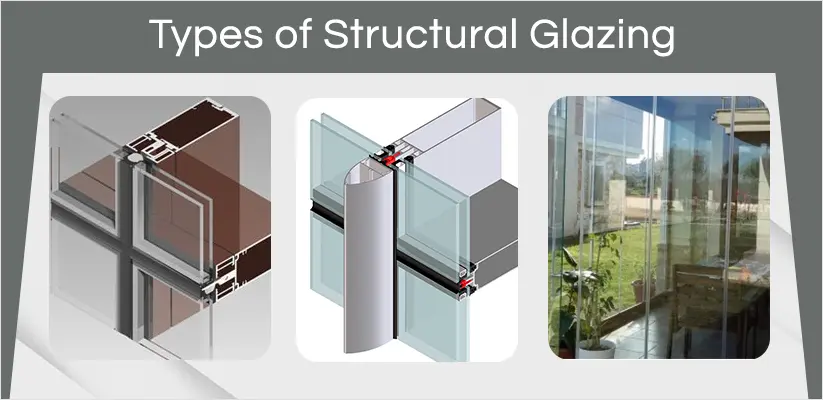
Structural glazing involves attaching the glass directly to the building structure, using specialized adhesives instead of traditional framing. This method allows for a cleaner appearance and maximizes natural light while maintaining structural integrity. It is ideal for modern architectural designs that emphasize transparency and minimalistic aesthetics. One of the critical structural glazing details includes the use of silicone sealants that ensure weather-tightness and durability, making it suitable for various climates, including the extreme temperatures seen in Saudi Arabia.
3. Framed Window/Wall Systems
Framed window/wall systems consist of windows or walls supported by frames made from materials like aluminum or steel. This traditional approach offers flexibility in design and is often used for both residential and commercial buildings. These systems can accommodate various glazing types, including single, double, and triple insulating glass units, each tailored to specific thermal and acoustic performance standards. Additionally, they allow for easy integration with building management systems for energy efficiency monitoring and control.
Read also: Aluminium double glazed windows prices.
4. Insulated Glazing Units
Insulated glazing units (IGUs) are composed of two or more glass panes separated by an air or argon gas space, which serves as an insulator. This design minimizes heat transfer, making IGUs highly effective for energy conservation. These units can be customized with various coatings, like Low-E, which further enhances their performance by reflecting infrared light and keeping interiors cooler in hot climates. Commonly used in both residential and commercial applications, IGUs are essential for achieving energy efficiency goals.
5. Specialty Systems
Specialty systems encompass a range of unique glazing solutions designed for specific functional or aesthetic purposes. These can include laminated glass for safety and sound reduction, tempered glass for increased strength, and electrochromic or PDLC glass for dynamic privacy control and energy efficiency. Such systems are increasingly relevant in modern architecture, particularly in Saudi Arabia, where climate control and aesthetic appeal are paramount. Understanding the various types of glazing systems available allows project owners and investors to make informed decisions aligned with their project’s requirements.
Contact us to discover our comprehensive range of glazing systems, specifically designed to meet your unique needs. Get in touch now for expert advice and a personalized quote!
Read also: Best skylights for flat roofs
How to choose the right glazing system for Saudi projects?
Selecting the appropriate glazing system for projects in Saudi Arabia is vital for managing the extreme heat environment and maximizing energy efficiency. Prioritizing options that offer high thermal insulation and effective solar control is essential. Among the types of glazing systems, choices such as double or triple Low-E glass with aluminum frames and specialized coatings must meet the Saudi Building Code and sustainability standards, like Mostadam.
- Thermal Performance & Solar Control: Given the intense heat, it is imperative to choose glazing with a low Solar Heat Gain Coefficient (SHGC) to limit solar heat entry, alongside low U-values for optimal insulation. This ensures that interiors remain comfortable and reduces reliance on cooling systems.
- Glazing Type:
- Low-E Glass (Low-Emissivity): This option is essential for reflecting infrared radiation while allowing desirable visible light to enter.
- Double or Triple Glazing: These systems create insulating air gaps that significantly diminish heat transfer.
- Tinted or Reflective Glass: This helps reduce glare and further decreases solar heat gain.
- Smart Glass: Advanced technologies, such as Phase Change Materials (PCM), Polymer Dispersed Liquid Crystal (PDLC), and Suspended Particle Devices (SPD), can effectively cut down cooling loads.
- Frame Materials:
- Aluminum: Strongly recommended due to its lightweight nature, durability, and corrosion resistance, making it ideal for the harsh Saudi climate.
- uPVC: A viable alternative known for its excellent insulation properties and long-lasting performance.
- Safety & Durability:
- Blast-Resistant Glass: Laminated glass is ideal for security, as it can withstand pressure and impact from debris.
- Fire-Rated Glass: Important for safety, offering anywhere from 30 to 180 minutes of fire resistance, maintaining integrity and insulation.
- Regulatory Compliance: Ensure that all selected options comply with the Saudi Building Code and meet sustainability requirements established by frameworks like Mostadam.
- Orientation-Specific Design:
- For North-Facing orientations, aim to maximize daylight, enhancing indoor light quality.
- For south- or west-facing facades, utilize shaded or high-performance glass to reduce direct heat exposure, thereby improving energy efficiency.
- Market Context: With substantial projects like NEOM and the Red Sea Project spearheading demand for innovative solutions, there is an increasing emphasis on advanced, energy-efficient facades and smart glass technologies.
Understanding the types of glazing in buildings and their relevant structural glazing details can empower project owners and investors to make informed, strategic decisions that lead to sustainable, successful constructions.
Read also:
Modern Aluminium bathroom door designs
Structural Glazing vs Curtain Wall: Key Differences & Uses
Average Costs of Glazing Systems in Saudi Arabia
Understanding the types of glazing systems available in Saudi Arabia is essential for budgeting building projects. Generally, glazing systems can range from SAR 800 to SAR 2,500 for standard to custom aluminum double-glazed windows. Specialized insulated glass typically costs around SAR 300 per square meter. The cost can vary significantly depending on factors such as the type (e.g., sliding or sash), size, and insulation performance. Notably, while triple glazing may have a higher upfront expense, its energy savings can offset costs by up to SAR 512, making it a worthwhile investment for long-term efficiency.
Average Costs of Glazing Systems in Saudi Arabia (2025)
| Glazing System/Type | Unit | Estimated Cost (SAR) | Notes |
| Insulated Glass (Installation) | 𝑚2 | SAR 300 | Estimated average cost |
| Traditional Glass (Installation) | 𝑚2 | SAR 150 | Traditional options |
| Flat Glass (Import Price) | 𝑚2 | ~SAR 21 ($5.6 USD) | 2022 Data |
| Safety Glass (Export Price) | 𝑚2 | ~SAR 97 ($26 USD) | 2024 Data |
| Laminated Glass (Import) | Ton | ~SAR 37,500 ($10,000 USD) | 2025 Data |
| Aluminum Double Glazed Window | Unit | SAR 800 – 1,200 | Standard size (1200x1200mm) |
| Aluminum Double Glazed Window | Unit | SAR 1,200 – 1,800 | Large size (1800x1200mm) |
| Custom Design Windows | Unit | SAR 1,800 – 2,500 | Custom options |
| Sliding Windows | Unit | SAR 1,000 – 1,500 | – |
| Sash Windows | Unit | SAR 1,200 – 1,800 | – |
“Interested in upgrading your property? Contact us for a consultation on our state-of-the-art glazing systems. Take the first step towards excellence today!”
Frequently asked questions about Types of glazing systems
What are the different types of glazing?
The phrase “window glazing” typically denotes the glass used in windows. Windows may feature various glazing configurations, such as single, double, or triple glazing. Additionally, there are multiple types of glazing, including low-E glass, tempered glass, laminated glass, tinted glass, and reflective glass.
What are the different types of structural glazing systems?
There are several categories of structural glazing systems: Four-Sided Framed Glazing, Two-Sided Framed Glazing, and Frameless Glazing Systems.
What is the classification of glazing?
Glazing can be categorized as follows:
– Single Glazing: This consists of a single pane of glass, typically utilized in milder climates, but it tends to have poorer energy efficiency.
– Double Glazing: Comprising two layers of glass with an air space in between, this option provides enhanced insulation and improved energy efficiency.
What are glazing systems?
Structural glazing systems are variations of curtain wall systems that utilize glass bonded or anchored directly to a building’s framework, eliminating the need for continuously gasketed aluminum pressure plates or caps.